



























For securing your website, you'll need to first comprehend common vulnerabilities such as SQL injections or Cross-Site Scripting. Then, it's important to execute strong password protocols, like two-factor authentication or password managers, and educate your users on the importance of complex passwords. Secure Sockets Layer (SSL) certificates are also essential, providing HTTPS encryption for data protection. Lastly, don't forget the importance of regular backups and consistent updates to patch any vulnerabilities. Combined, these measures greatly enhance your site's security. Stick with me to gain deeper insights and practical action steps to each of these techniques.
Key Takeaways
- Implement secure password protocols, including two-factor authentication and password complexity rules.
- Regularly test your website for vulnerabilities like SQL injections and XSS using penetration testing.
- Obtain an SSL certificate from a reputable authority for HTTPS encryption and data breach prevention.
- Schedule automated backups of your website data to protect it from loss and human errors.
- Keep your website updated consistently to patch any identified vulnerabilities and maintain its current status.
Understanding Website Vulnerabilities

Surveying the expansive terrain of the internet, it's essential to comprehend website vulnerabilities. You see, common vulnerabilities like SQL injections, Cross-Site Scripting (XSS), and Cross-Site Request Forgery (CSRF) can compromise your site's integrity. Importantly, such security risks could greatly impact your online business and promotional activities, just like how SA Websites significantly contributes to its clients' business success.
These, along with others like clickjacking and unvalidated redirects, are digital landmines that can explode your site's protection measures.
The significance of testing, hence, can't be overstated. Regular penetration testing and vulnerability assessments are your frontline defense. They identify weak spots, giving you the chance to fortify your defenses. It's like a regular health check-up for your website, ensuring it's in tip-top shape to resist cyber threats.
To stay at the forefront of innovation, understanding and addressing these vulnerabilities is critical. Remember, the stronger your understanding, the stronger your website's security.
Implementing Secure Password Protocols
One of the most effective defenses against website breaches is applying secure password protocols. This involves creating a secure environment for your website and its users. But what does this involve?
- Two factor authentication: This adds an additional layer of security by mandating two forms of identification. It's not sufficient to just enter your password; you'll need to verify your identity through a second method.
- Password managers: These tools not only securely store your passwords but also aid in generating intricate passwords that are more challenging for hackers to decipher.
- User education: It's essential to educate your users about the significance of password complexity and the dangers of using feeble passwords. As part of this, it's crucial to emphasize the importance of regular password changes.
- Password complexity: Enforce protocols that necessitate users to create intricate passwords, blending uppercase and lowercase letters, numbers, and special characters.
Utilizing SSL Certificates
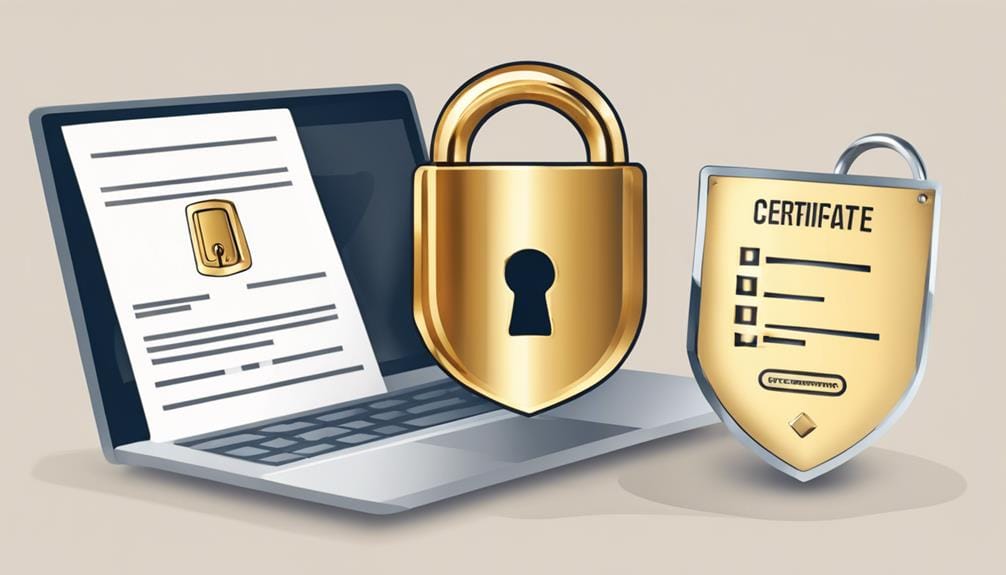
When it comes to fortifying your website's security, an SSL certificate is an invaluable asset. This digital document employs HTTPS encryption, guarding data as it travels between the web server and browser.
Not just any SSL certificate will do, though. It's essential to obtain one from a reputable certificate authority, which validates your website's identity and guarantees you're not a fraudster in disguise.
SSL certificates are synonymous with cutting-edge security and trust, transforming your HTTP site into a secure HTTPS. This encryption protocol is a bulwark against data breaches and cyber-attacks, making it essential in our digital age.
Don't underestimate the power of SSL – it's a necessity, not a luxury, for any innovative, security-conscious website owner.
Regular Website Backups and Updates
While the SSL certificate puts a strong lock on your website's front door, regular website backups and updates are akin to a reliable alarm system. They're essential for maintaining your site's integrity and security.
Backup frequency matters – the more often you backup, the less data you risk losing. Consistent updates are equally important; they patch vulnerabilities and keep your site current.
Here are some key steps:
- Establish a schedule for regular backups. Daily is ideal.
- Automate your backups whenever possible to avoid human error.
- Understand update importance. Regularly update your site's CMS, plugins, and themes.
- Audit your backup and update processes periodically, ensuring they're functioning correctly.
Frequently Asked Questions
What Are the Effective Ways to Protect My Website From DDOS Attacks?
To safeguard your website from DDoS attacks, I'd suggest network monitoring and traffic analysis. They'll help you detect unusual traffic patterns early, enabling you to react swiftly and keep your website secure and functioning at its best.
How Can I Ensure Secure Credit Card Transactions on My E-Commerce Site?
To guarantee secure credit card transactions on your site, I'd recommend payment encryption, fraud detection systems, tokenization, and PCI compliance. These innovative measures provide robust security, reducing risk and boosting customer confidence.
What Steps Should I Take to Prevent SQL Injection on My Website?
To prevent SQL injection on your site, I'd strongly suggest incorporating input validation, using prepared statements, employing parameterized queries, and always escaping input. These steps can greatly enhance your website's security.
Should I Use a Web Application Firewall for My Websites Security?
Absolutely, a Web Application Firewall (WAF) is a knight in shining armor for your website's security. Its effectiveness relies heavily on your configuration skills. Set it up properly, and you've got a robust defense mechanism.
How Do I Safeguard My Website From Cross-Site Scripting (Xss) Attacks?
To safeguard your website from cross-site scripting (XSS) attacks, I'd recommend incorporating content security policies and rigorous input validation. It's a tech-savvy approach that'll greatly enhance your site's defense against such security threats.
