





























To ensure your website is SEO-friendly, I'll use a mix of crucial strategies. First, I'll explore keyword research, identifying the best detailed keywords fitting your niche. Next, I'll optimize meta tags and incorporate internal linking to guide search engines to your content effectively. Moreover, creating a mobile-friendly design will be crucial; it not only improves user experience but also aligns with Google's algorithm preference towards mobile-optimized sites. Monitoring and refining these strategies will be an ongoing process to maintain your SEO quality. Stick with me, and there's a wealth of SEO knowledge we'll discover together.
Key Takeaways
- Optimize your website's structure with strategic use of meta tags and internal linking for better navigation.
- Conduct a competitive analysis to identify and implement high-volume, relevant long tail keywords.
- Ensure your site is mobile-friendly with optimized touch screen navigation and fast loading times.
- Take into account user intent and behavior when choosing keywords and designing your website.
- Regularly monitor your SEO strategy and consistently build links to maintain and improve your site's rankings.
Understanding SEO Basics

In the field of digital marketing, getting to grips with SEO basics is akin to finding your compass in a vast wilderness. Meta tags and internal linking are two essential SEO strategies you can't ignore. Learning how to optimize these strategies is vital for the business of designing your website.
Meta tags, those hidden HTML elements, help search engines understand your content. They're not visible to visitors but they're the signposts guiding search engines to your digital door. They're your opportunity to tell search engines what your content's about and why it's valuable.
Internal linking, on the other hand, enhances your site navigation, spreading ranking power around your pages. It's a strategic way of telling search engines, "Hey, check out this related content!"
It's like weaving a spiderweb of relevancy and authority throughout your site. Strategic, innovative SEO? It's all in the details.
Keyword Research and Implementation
Diving headfirst into keyword research and application can transform your website's SEO performance. By correctly incorporating on-page factors and external links, your rankings are likely to improve. This process, when done strategically, can boost your visibility and drive traffic to your site. Here's how I suggest you get started:
- Perform a competitive analysis. Identify what keywords your competition is ranking for and seek opportunities where you can outperform them.
- Use long tail keywords. They're particular and less competitive, giving you a better chance of ranking high.
- Analyze search volume and relevance. The ideal keyword has a high search volume and is highly relevant to your content.
- Consider user intent. What's your audience likely to search for? Align this with your keyword strategy.
- Continually monitor and adjust your strategy. SEO isn't a one-time thing; it's an ongoing process that needs regular fine-tuning and ongoing link building for effective rankings.
Optimizing Website Structure
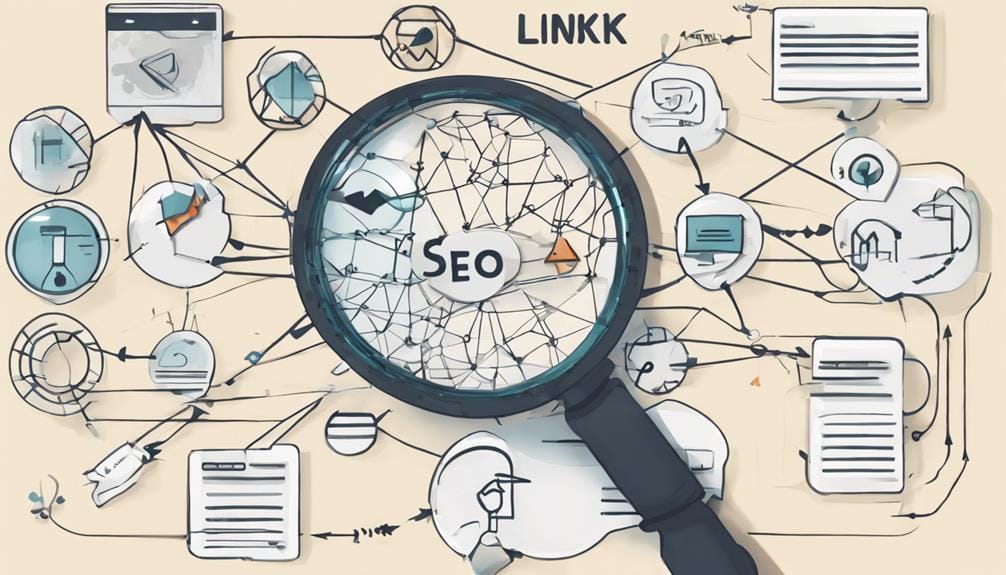
With the right structure, your website can greatly enhance its SEO performance. It's not just about content; it's how your content is organized. Strategic use of meta tags, for instance, helps search engines understand your site's purpose and relevance. They're the invisible guiding hand that communicates your site's value to those digital spiders.
But let's not forget the power of internal linking. As part of a thorough SEO integration, understanding the importance of keyword research and link building can prove invaluable. By creating a network of internal links, you're not only improving navigation for your users but also directing search engine bots to your most important pages. It's like laying out a welcome mat for both your visitors and search engines.
Importance of Mobile-Friendly Design
Moving on from optimizing your website structure, let's address another essential aspect of SEO – ensuring your site is mobile-friendly. A mobile-friendly or responsive design enhances the user experience, which is a vital component of SEO. As web designers in Pretoria South emphasize, understanding user behavior and utilizing innovative web technologies are essential to achieve this. Google's algorithm favors mobile-friendly sites, so it's not just a recommendation, it's a requirement.
To guarantee a mobile-friendly design, consider:
- Optimizing for touch screen navigation – Finger-friendly design is a necessity.
- Fast loading times – Nobody likes to wait. This is particularly important, as improved site navigation and quicker loading times are crucial for SEO integration.
- Easy to read content – Large fonts and contrasting colors help.
- Responsive layout – It should adapt to any screen size.
- Minimalist design – Clean and focused on core messages.
Frequently Asked Questions
What Are the Benefits of Having an Seo-Friendly Blog on My Website?
An SEO-friendly blog boosts your website's visibility online. It drives more organic traffic, enhances user engagement, and increases your site's credibility. It's a strategic move with substantial SEO advantages and blog benefits.
How Can Social Media Platforms Help Improve My Websites SEO?
By bolstering social engagement and encouraging content sharing, I'll leverage your social media platforms to boost your website's SEO. It's a strategic, innovative approach that enhances visibility and drives organic traffic to your site.
Do Website Loading Speed and Performance Affect SEO Rankings?
Absolutely, your website's loading speed and performance impact SEO rankings. Better mobile optimization, user experience, image optimization, and content quality all contribute to faster loading times and higher performance.
How Can I Measure the Success of My SEO Strategy?
I measure my SEO strategy's success through tracking analytics and continuous keyword research. It's amazing to realize that 61% of marketers say improving SEO is their top inbound marketing priority. It's all about strategic innovation.
What Is the Role of Backlinks in Making a Website Seo-Friendly?
Backlinks play an essential role in SEO. They're like votes of confidence from other sites. Using strategic link building and focused anchor text, I'll make your site more visible and credible to search engines.
