
























To track your website's performance and analytics, Google Analytics is your best friend. You'll start by adding a tracking code to your site, then you'll be able to monitor metrics like audience engagement, bounce rates, and conversion rates. For deeper SEO insight, consider using SEO tracking tools. They'll give you invaluable info about keyword traffic and how your site stacks up against competitors'. Remember, tracking is just the first step. Data analysis can help optimize your website and boost performance, steering your strategy based on real numbers. Stick around, there's more to make your website truly stellar.
Key Takeaways
- Set up Google Analytics on your website by adding a tracking code to monitor visitor demographics and real-time data.
- Implement SEO tracking tools for insights on search engine performance, keyword traffic, and competitor strategies.
- Customize your Google Analytics dashboard to focus on key metrics like conversion and bounce rates.
- Use data analysis to identify target audience, tailor content, and make data-driven decisions for performance optimization.
- Constantly monitor and adjust your SEO strategy based on the data received from tracking tools for improved visibility and conversion rates.
Understanding Basic Website Metrics

In today's digital era, understanding basic website metrics is essential to the success of your online presence. For instance, in the field of guest house website design, monitoring website performance through analytics is a critical step in ensuring improvement and growth. Key performance indicators like conversion rates and bounce rates can provide invaluable insights.
Conversion rates represent the percentage of visitors who complete a desired action, like making a purchase or filling out a form. The higher your conversion rate, the more effectively your website turns visitors into customers.
Bounce rates, on the other hand, measure the percentage of visitors who leave your site after viewing only one page. A high bounce rate might indicate that your site isn't captivating enough. By keeping an eye on these metrics, you can refine your website to better cater to your audience's needs and preferences. This includes integrating elements like branding consistency and high-quality visuals for effective storytelling.
Implementing Google Analytics
Let's dive right into the heart of website analytics: Google Analytics. If you're setting up Google Analytics for the first time, it's pretty straightforward.
You'll need to sign in with a Google account, add your website as a property, and apply the tracking code on your site. Just like how the Website Designer Pretoria focuses on data-driven strategies for optimized user experience, Google Analytics provides a plethora of metrics including visitor demographics, traffic sources, and real-time data.
This allows you to understand user behavior, identify trends and make data-driven decisions. You can customize your dashboard to focus on the metrics that matter most to you.
Applying SEO Tracking Tools
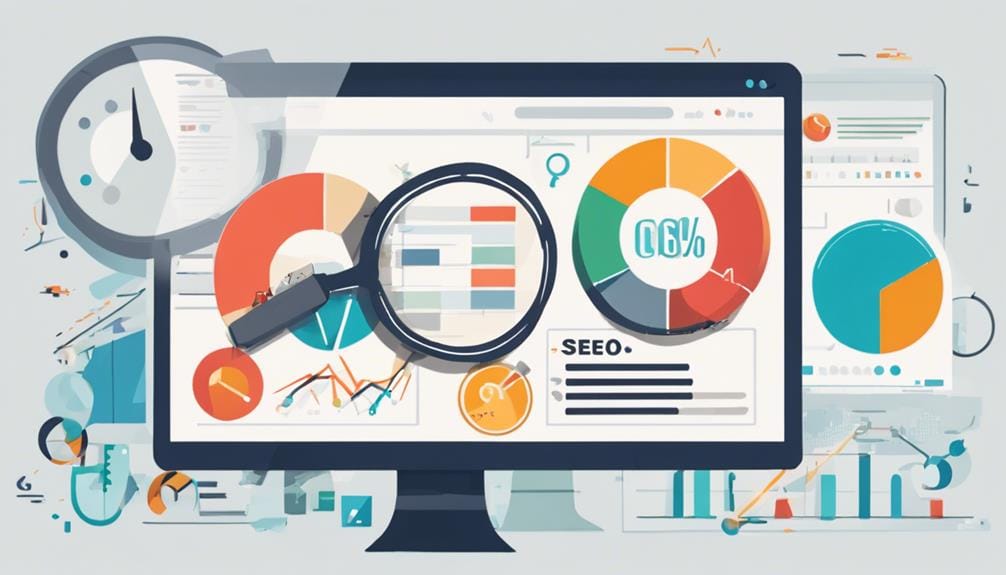
While Google Analytics provides a wealth of information about user behavior, another tool in our arsenal is SEO monitoring tools. These tools are essential for developing, executing, and evaluating the effectiveness of innovative SEO strategies.
Website performance optimization plays a significant role in improving your site's ranking in search results, impacting both visibility and conversion rates. They offer insights into how your website is performing in search engines, what keywords are driving traffic, and where there's space for enhancement.
These tools can also help you comprehend your competitors' strategies. Understanding the importance of website functionality can lead to a more efficient and captivating site.
Tracking results is a vital part of any SEO strategy. It's what allows you to measure success, identify opportunities, and make data-driven decisions. Remember, SEO isn't a set-it-and-forget-it tactic. It requires constant monitoring and adjustment, and SEO monitoring tools are pivotal to that process.
Interpreting Data and Improving Performance
Exploring the terrain of website analytics can seem overwhelming, but it plays a vital role in our success. Through data analysis, we can decipher the story behind the numbers, helping us to understand what works and what doesn't.
Are we reaching our target audiences effectively? Is our content tailored to their interests? Identifying these metrics is the first step towards performance optimization. We can then make data-driven decisions to improve our strategies.
For example, if we notice high bounce rates on a particular page, we could tweak the design or content to make it more attractive. If a specific keyword is driving significant traffic, we could use it more frequently.
Frequently Asked Questions
How Can I Track Social Media Traffic on My Website?
I use tools like Google Analytics to track social media engagement and identify traffic sources on my website. It's innovative, detailed, and gives insights into user behavior, helping me optimize for better results.
Can Website Performance Be Tracked in Real-Time?
Real-time monitoring guarantees data accuracy. You can track user engagement, bounce rates, and more instantly. It's an innovative approach that provides you immediate insights into your website's performance.
What Are the Best Alternatives to Google Analytics for Tracking Website Performance?
In seeking alternatives to Google Analytics for website performance tracking, I'd suggest Matomo and Clicky. They're both robust analytics software alternatives offering real-time data, user-friendly dashboards, and insightful metrics for an innovative approach to site analysis.
How Does Website Performance Affect Customer Conversion Rates?
Poor website performance can greatly impact customer conversion rates. If your site's slow or difficult to navigate, it'll decrease user engagement and alter customer behavior, leading to fewer conversions. So, always aim for top-notch performance.
How Can I Track the Performance of My E-Commerce Site?
I use tools like Google Analytics to monitor my e-commerce site's performance. It helps me track sales conversion and user engagement, offering insightful data to constantly innovate and improve my website's user experience.
